
count
nounto determine the total number of items; also refers to considering or taking into account.
What Makes This Word Tick
Count means to determine number or to include something in consideration. The word joins calculation with attention, making it useful for both math and judgment.
If Count Were a Person…
Count would be orderly, focused, and hard to distract once they started. They would want every piece accounted for before moving on.
How This Word Has Changed Over Time
The idea of counting has remained steady as one of the most basic human ways of measuring and organizing. The added sense of taking something into account grew naturally from that habit of careful reckoning.
Old Sayings and Proverbs
This word fits proverb-style reminders that what gets counted often gets valued.
Surprising Facts
Count works in both exact and figurative ways. You can count objects, but you can also say that an opinion or effort counts, which makes the word feel broader than arithmetic alone.
Out and About With This Word
You’ll hear count in classrooms, finance, planning, sports, and everyday speech whenever people track numbers or emphasize importance.
Pop Culture Moments Where Count Was Used
In pop culture, counting often appears in races against time, scorekeeping, and dramatic moments when every second or every vote seems to matter.
The Word in Literature
Writers use count to show precision, anticipation, or value. A character counting steps, days, or chances can make tension feel measured and immediate.
Moments in History with Count
The idea behind count matters everywhere records, trade, votes, and timekeeping shape society. Counting turns experience into something trackable and comparable.
This Word Around the World
Every language has ways to express counting and reckoning because number and measure are universal parts of life. The idea of something counting in importance also appears widely.
Where Does It Come From?
The inventory gives a Latin note, but the gloss provided does not clearly match the modern meaning.
How People Misuse This Word
People sometimes use count as if it only refers to number, but it also means to matter or to be included in judgment. Context decides which sense is active.
Words It’s Often Confused With
Count overlaps with tally and enumerate, though tally often emphasizes final totals and enumerate can sound more formal. It also differs from matter, which focuses only on importance rather than number.
Additional Synonyms and Antonyms
Additional Synonyms: reckon, add up, factor in Additional Antonyms: overlook, omit, leave out
Want to Try It Out in a Sentence?
"He began to count the minutes until the class was over."
Explore more words

aberration
[ab-uh-rey-shuhn]
a departure from what is normal, usual, or expected, typically one that is unwelcome

hobnob
[hob-nob]
to associate on very friendly terms (usually followed by 'with')

manavelins
[muh-nav-uh-linz]
miscellaneous pieces of gear and material

frightening
[fryt-ning]
causing fear or alarm

limpid
[lim-pid]
clear, transparent, or pellucid (as water, crystal, or air)
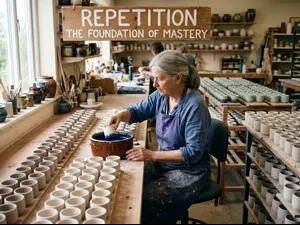
repetition
[r-ep-et-ishun]
the act of doing, saying, or showing something again, often to emphasize or reinforce.

glower
[glou-er]
to look or stare with sullen dislike, discontent, or anger

falsity
[f-als-ity]
the quality or state of being untrue or deceptive.

admonish
[ad-mon-ish]
to reprove or scold, especially in a mild and good-willed manner

disintegration
[dis-in-ti-grey-shuhn]
the process of breaking into smaller parts

abrasive
[uh-brey-siv]
tending to abrade; causing abrasion; abrading

pachyderm
[pak-i-durm]
a very large mammal with thick skin, especially an elephant, rhinoceros, or hippopotamus

comet
[k-om-et]
a celestial object made of ice, dust, and gas, often with a glowing tail when near the sun.

obviate
[ob-vee-eyt]
to anticipate and prevent or eliminate (difficulties, disadvantages, etc.) by effective measures; render unnecessary

jocund
[jok-uhnd]
cheerful; merry; blithe; glad

guileless
[gahyl-lis]
free from guile; sincere; honest; straightforward; frank