
disquieting
adjectivecausing anxiety or uneasiness; disturbing
What Makes This Word Tick
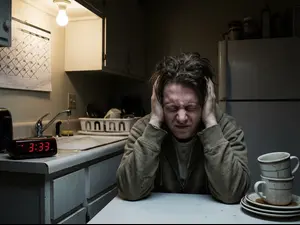
"Disquieting" is a word that perfectly captures that uneasy feeling you get when something's just a bit off. It's like the chill of seeing a shadow move out of the corner of your eye or watching a thriller movie alone at night. It's an adjective used to describe events or situations that cause worry, anxiety, or disturbance.
If Disquieting Were a Person…
Imagine Disquieting as that mysterious neighbor who never quite fits in. They dress in slightly outdated styles, always seem to be watching, yet reveal nothing about themselves. You invite them over hoping to uncover their secrets, but they leave behind even more questions.
How This Word Has Changed Over Time
The essence of "disquieting" has remained fairly consistent over time. It has historic roots in Old French, with "desquier" conveying a sense of disturbance or unrest. Although its application may have broadened with modern psychology and thrillers, the core meaning persists.
Old Sayings and Proverbs That Use Disquieting
While there's no traditional proverb that uses "disquieting" directly, the sentiment can be found in sayings like "still waters run deep." Both convey the idea that what seems calm on the surface may hide something unsettling beneath.
Surprising Facts About Disquieting
Did you know a soft, eerie piano tune playing in the background of a scene can make it feel disquieting? Filmmakers have used this trick for decades, employing sound as a cunning partner to visual storytelling.
Out and About With This Word
Next time you wander through a slightly foggy forest path or visit an old, creaky house, think about how "disquieting" those places might feel. It's a word ready for use anywhere a little mystery or tension lurks in the environment.
Pop Culture Moments Where Disquieting Was Used
Hitchcock films are famously disquieting. Think of the scene with the birds ominously gathering in "The Birds"-they're not doing anything... yet. But you and Tippi Hedren both know they're up to something.
The Word in Literature
Authors like Edgar Allan Poe revel in the disquieting. Their stories thrive on unsettling readers, drawing them into worlds where the line between reality and imagination blurs, leaving an indelible mark on the psyche.
Moments in History with Disquieting
The Cuban Missile Crisis was a disquieting time in history. The world held its breath, unsure of what would come next. It was a prime example of an uneasy calm preceding potential chaos.
This Word Around the World
In German, you might use "beunruhigend" to capture the essence of "disquieting," while in French, "inquiétant" does the trick. Despite language differences, the feeling is universally recognized-a testament to the shared human experience of unease.
Where Does It Come From?
The roots of "disquieting" lie in the Latin "dis-" meaning "apart" and "quietus," which pertains to rest or calm. Put them together, and you've got something that's decidedly not restful.
How People Misuse This Word
Sometimes people use "disquieting" to simply mean "strange" or "weird." While it can encompass these, "disquieting" specifically involves an element of disturbance or alarm-not just oddity.
Words It's Often Confused With
- Disturbing: This word is a bit stronger and more negative.
- Unsettling: Often interchangeable, though "unsettling" lacks the direct implication of causing fear or alarm.
- Nerve-wracking: Suggests stress or anxiety but less subtle than "disquieting."
Additional Synonyms and Antonyms
For more synonyms, think of words like "unsettling," "troubling," and "disturbing." In terms of antonyms, "reassuring" or "calming" present a nice juxtaposition to "disquieting."
Want to Try It Out in a Sentence?
How about this: "The abandoned fairgrounds, with its rusting rides and echoing silence, was disquieting under the pale moonlight."
Explore more words
11 Dumbest Things Middle-Class Americans Waste Money On
See what to cut →
torrid
[tawr-id]
ardent; passionate

myrrh
[mur]
an aromatic resinous exudation from certain plants of the genus Myrrhis, especially M. odorata, a small spiny tree: used for incense, perfume, etc.

Little-Known Money Hacks That Could Save You Hundreds
Review the list →

Is Staying With the Same Insurer Costing You More?
Explore Your Options →

chicana
[chee-kah-nuh]
an american woman or girl of mexican descent.

piquant
[pee-kuhnt]
agreeably pungent or sharp in taste or flavor; pleasantly biting or tart

These 10 Money Moves Could Save Seniors Hundreds
Read more →

astronomical
[as-truh-nom-i-kuhl]
extremely large; exceedingly great; enormous

fisticuffs
[fis-tuh-kuhfs]
combat with the fists
tocsin
[tok-sin]
a signal, especially of alarm, sounded on a bell or bells
knell
[nel]
the sound made by a bell rung slowly, especially for a death or a funeral

inflate
[in-flate]
exaggerate or make bigger.
incessant
[in-ces-ant]
unending

sullen
[sul-en]
bad-tempered and gloomy

provision
[pruh-vizh-uhn]
a stipulation (as a clause in a statute or contract) made in advance.

discursive
[dih-skur-siv]
passing aimlessly from one subject to another; digressive; rambling

mesmerizing
[mez-muh-rahy-zing]
completely engrossing; captivating or fascinating

abrogate
[ab-ruh-geyt]
to abolish by formal or official means; annul by an authoritative act; repeal

veneer
[vuh-neer]
a thin layer of wood or other material for facing or inlaying wood