
ostracism
nounexclusion from a group
What Makes This Word Tick
Ostracism means exclusion from a group—being shut out socially, deliberately or by collective drift. It’s about belonging and the painful loss of it, whether the exclusion is explicit or quietly enforced. Compared with isolation, ostracism usually implies other people are doing the excluding, not just circumstances.
If Ostracism Were a Person…
Ostracism would be the silent doorman who suddenly won’t meet your eyes and won’t let you back in. They don’t always shout; sometimes they simply turn away and let the crowd do the rest. Being near them feels like standing outside a warm room, hearing laughter through the door.
How This Word Has Changed Over Time
Ostracism has moved from a specific historical practice of exile into a broad term for social exclusion. The modern meaning stays focused on being pushed out of a group or community.
Old Sayings and Proverbs
A proverb-style idea that matches ostracism is that belonging can be taken away faster than it can be earned. This reflects the meaning because ostracism is exclusion from a group, often changing someone’s social standing overnight.
Surprising Facts
Ostracism often operates through ordinary behaviors—no invitations, no replies, no seats saved—so it can be hard to point to one single act. The word is also useful because it describes a social pattern, not just a feeling. In writing, it can quickly raise stakes by turning conflict into loss of belonging.
Out and About With This Word
You’ll often see ostracism in discussions about groups, communities, workplaces, and schools—anywhere acceptance and exclusion shape daily life. It’s used when the key issue is being shut out by others rather than simply being alone. The word fits best when group dynamics are central.
Pop Culture Moments Where Ostracism Was Used
In pop culture, ostracism often appears in stories where someone breaks a norm and the group responds by freezing them out. That reflects the definition because the punishment is exclusion from belonging, not just a private argument. The theme shows how powerful group acceptance can be.
The Word in Literature
In literary writing, ostracism is often used to explore social pressure, conformity, and the emotional cost of exclusion. It can shape character motivation by making acceptance a need and exclusion a threat. For readers, the word signals a conflict that plays out in relationships and community boundaries.
Moments in History with Ostracism
Historically, societies have used exclusion—formal or informal—as a way to enforce norms and manage conflict within groups. This matches the definition because ostracism is about being pushed out of belonging. Even without naming specific events, the pattern is clear: exclusion can function as social punishment.
This Word Around the World
Many languages have direct terms for “shunning,” “banishment,” or “social exclusion,” sometimes distinguishing between legal exile and everyday social freezing-out. The core idea remains exclusion from a group.
Where Does It Come From?
Ostracism traces back to Greek ostrakismos, linked to pottery shards used in a voting process for exile, and it later broadened into the general idea of exclusion. The origin helps explain why the word still feels like “being cast out,” not merely “being alone.”
How People Misuse This Word
Ostracism is sometimes used for any loneliness, but the word is specifically about being excluded by a group. If someone is alone by choice or circumstance without exclusion, solitude or isolation may be more accurate.
Words It’s Often Confused With
Ostracism is often confused with isolation, but ostracism implies a group is doing the excluding. It can also overlap with exile, though exile is often formal or geographic, while ostracism can happen socially in everyday settings.
Additional Synonyms and Antonyms
Additional Synonyms: shunning, expulsion, banishment Additional Antonyms: inclusion, acceptance, welcome
Want to Try It Out in a Sentence?
"Beth risked ostracism if her roommates discovered her flatulence."
Explore more words

hamartia
[hah-mahr-tee-uh]
a fatal flaw leading to the downfall of a tragic hero or heroine

spawned
[spawnd]
brought forth ; generated, produced.

yearning
[yur-ning]
deep longing, especially when accompanied by tenderness or sadness

growl
[gr-owl]
a low, guttural sound made in anger or threat, often by animals; also refers to complaining gruffly.

bilious
[bil-yuhs]
peevish; irritable; cranky

animus
[an-uh-mus]
strong hostility or ill feeling

punctilious
[puhngk-til-ee-uhs]
extremely attentive to punctilios; strict or exact in the observance of the formalities or amenities of conduct or actions; showing great attention to detail or correct behavior

uitwaaien
[out-vahyn]
the Dutch practice of jogging or walking into the wind, especially in the winter, for the purpose of feeling invigorated while relieving stress and boosting one’s general health

pitiable
[pit-ee-uh-buhl]
evoking or deserving pity; lamentable; miserable; contemptible

satiate
[sey-shee-eyt]
to supply something with excess, such as disgust or weary

stalactite
[stuh-lak-tahyt]
a deposit, usually of calcium carbonate, shaped like an icicle, hanging from the roof of a cave or the like, and formed by the dripping of percolating calcareous water

bewitched
[b-ew-itch-ed]
enchanted or under a magical spell; also refers to being captivated or charmed.
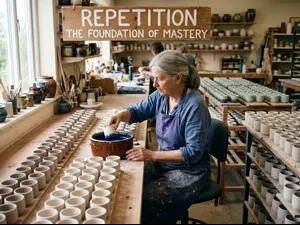
repetition
[r-ep-et-ishun]
the act of doing, saying, or showing something again, often to emphasize or reinforce.

idyllic
[ahy-dil-ik]
suitable for or suggestive of an idyll; charmingly simple or rustic

salient
[sey-lee-uhnt]
prominent or conspicuous

quip
[kwip]
a sharp, sarcastic remark; a cutting jest