
parallel
Adjectiveextending in the same direction, never meeting
What Makes This Word Tick
Parallel describes things extending in the same direction without meeting, keeping a steady, consistent relationship. It’s a geometry-flavored idea that also works as a clean metaphor for sameness in direction. Compared with aligned, parallel adds the nuance of “never meeting,” not just “lined up.”
If Parallel Were a Person…
Parallel would be the companion who walks beside you at the same pace, always close but never crossing into your lane. They’re steady, consistent, and quietly matched to your direction. Being around them feels balanced—two paths moving together without collision.
How This Word Has Changed Over Time
Parallel has stayed anchored to the idea of matching direction without intersection, and it remains a precise, useful descriptor. Over time, it has also become a common way to describe things that “run alongside” each other conceptually, while keeping the same core image.
Old Sayings and Proverbs
A proverb-style idea that matches parallel is that two people can move in the same direction without ever truly meeting. This reflects the definition because parallel lines stay alongside each other while remaining separate.
Surprising Facts
Parallel is one of those words that can feel exact even in everyday writing, because it carries a clear spatial picture. It often signals calm structure—things that stay consistent rather than colliding. In description, it can make a scene feel orderly and measured, like the world has lines and lanes.
Out and About With This Word
You’ll see parallel in math, design, and everyday description of lines, paths, edges, and patterns. It’s also handy when comparing two things that seem to follow the same direction without converging. The word fits best when “side by side, never meeting” is the core idea.
Pop Culture Moments Where Parallel Was Used
In pop culture, the idea of parallel often shows up in stories about two paths unfolding side by side—similar directions, separate outcomes. That reflects the definition because the paths match in direction but do not meet. The concept creates a satisfying sense of structure and comparison.
The Word in Literature
In literary writing, parallel is often used to create controlled comparison—two lines of action, two lives, or two ideas set beside each other without merging. It can sharpen tone by making similarity feel deliberate and patterned. For readers, the word suggests a relationship that is close and comparable, yet still separate.
Moments in History with Parallel
The concept of parallel fits historical contexts where developments move alongside each other without direct intersection—separate groups, separate decisions, similar trajectories. This matches the definition because it emphasizes same-direction movement with continued separation. It’s a useful way to describe patterns without claiming direct contact or overlap.
This Word Around the World
Many languages have direct equivalents for parallel, especially in math and design, often built around ideas like “side by side” or “along the same line.” The meaning stays consistent because the underlying geometry is clear.
Where Does It Come From?
Parallel comes from Greek roots meaning “alongside one another,” which matches the modern sense of lines extending together without meeting. The origin keeps the core image intact: beside, not intersecting.
How People Misuse This Word
Parallel is sometimes used for things that are merely similar, even when they overlap or intersect. In the strict sense, parallel emphasizes continuing separation while moving in the same direction.
Words It’s Often Confused With
Parallel is often confused with perpendicular, but perpendicular lines meet at right angles instead of never meeting. It can also overlap with aligned, though aligned can describe things that line up even if they eventually cross.
Additional Synonyms and Antonyms
Additional Synonyms: side-by-side, coextensive, running alongside Additional Antonyms: crossing, converging, slanting toward
Want to Try It Out in a Sentence?
"The two lines remained parallel, never intersecting on the graph."
Explore more words
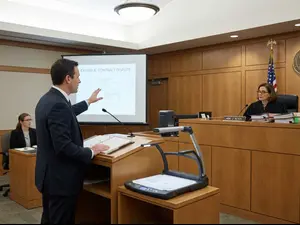
case
[k-as-e]
a container or situation designed for a specific purpose; also refers to an instance or example.

crapulous
[krap-yuh-luhs]
given to or characterized by gross excess in drinking or eating

submerged
[suhb-murjd]
plunged into water or other fluid.

basilica
[buh-sil-ih-kuh]
a large church or building with a central nave and aisles, often used as a christian place of worship.

perky
[pur-kee]
jaunty; cheerful; brisk; pert

innate
[ih-neyt]
inherent in the essential character of something

innovation
[in-uh-vey-shuhn]
the introduction of new ideas, methods, or products; the act of innovating.

prosperous
[pros-per-uhs]
having or characterized by financial success or good fortune; flourishing; successful

haboob
[huh-boob]
a thick dust storm or sandstorm that blows in the deserts of North Africa and Arabia or on the plains of India

execrable
[ek-si-kruh-buhl ]
utterly detestable; abominable; abhorrent

arduous
[ahr-joo-uhs]
requiring great exertion; laborious; difficult

dilute
[dih-loot]
to make less concentrated ; to diminish the strength or flavor of something.

buttery
[buht-er-ee]
having the taste or texture of butter

crime
[krahym]
an illegal act for which someone can be punished by the government
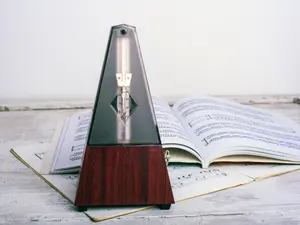
metronome
[me-truh-nohm]
a mechanical or electrical instrument that makes repeated clicking sounds at an adjustable pace, used for marking rhythm, especially in practicing music

confidential
[kon-fi-den-shuhl]
intended to be kept private or secret