
rumour
nouna circulating story or report of uncertain truth
What Makes This Word Tick
A rumour is a circulating story or report of uncertain truth—information that’s being passed along without solid confirmation. It often spreads through repetition, curiosity, and gaps in what people actually know. Compared with a report, rumour emphasizes uncertainty and the risk of being wrong.
If Rumour Were a Person…
Rumour would be the whispery messenger who slips through crowds faster than anyone can verify what they’re saying. They’re attention-grabbing but slippery, always changing a little as they travel. Being around them feels like trying to catch smoke in your hands.
How This Word Has Changed Over Time
Rumour has stayed anchored to the idea of unverified circulating talk, with modern usage still stressing uncertainty and spread. What shifts is the environment—rumours move through whatever communication channels people use—but the core meaning remains: a story in motion without confirmed truth.
Old Sayings and Proverbs
A proverb-style idea that matches rumour is that words can travel faster than proof. This reflects the meaning because a rumour spreads as a circulating story while its truth remains uncertain.
Surprising Facts
One interesting thing about rumour is that it’s defined by uncertainty—if it becomes clearly verified, it stops being a rumour in the strict sense. The word also carries a social signal: it warns the listener to be cautious about believing or repeating it. In writing, calling something a rumour instantly shifts the reader into “maybe” mode.
Out and About With This Word
You’ll often see rumour in workplaces, schools, communities, and news-adjacent conversation when information is incomplete and people fill in gaps. It’s common in situations with uncertainty—changes, surprises, or private decisions that others speculate about. The word fits best when the key point is that the story is circulating but not confirmed.
Pop Culture Moments Where Rumour Was Used
In pop culture plots, rumours often spark conflict, misunderstandings, or sudden shifts in reputation, because characters act on information that isn’t proven. That matches the definition: the story circulates, its truth is uncertain, and the uncertainty is exactly what makes it volatile.
The Word in Literature
In literature, rumour can function like a moving shadow over a community—something everyone has heard, no one can fully prove, and yet it influences choices. Writers use it to show social pressure and the fragility of reputation, because unverified talk can still have real effects. For readers, the word signals that perception may be driving the story as much as truth.
Moments in History with Rumour
Across history, rumours have appeared whenever uncertainty meets high interest—times when people lack confirmed information and stories spread anyway. This aligns with the definition because the hallmark is a circulating report whose truth is not settled.
This Word Around the World
Across languages, this idea is usually expressed through words meaning gossip, hearsay, or an unverified report, often with a clear caution built in. Expression varies, but the shared concept is the same: a story traveling without confirmed truth.
Where Does It Come From?
Rumour comes through Old French from a Latin word tied to noise and gossip, which fits how rumours behave: they’re sound-like in the way they spread, growing and shifting as they move. The origin supports the sense of talk that travels widely before it settles into certainty (if it ever does).
How People Misuse This Word
Rumour is sometimes used as if it means a confirmed story, but it specifically implies uncertain truth. If the information is verified, statement, report, or fact is clearer.
Words It’s Often Confused With
Rumour is often confused with news, but news implies reporting that aims to be verified, while rumour is uncertain. It can also overlap with gossip, though gossip often emphasizes personal or social chatter, while rumour can be any circulating story of uncertain truth.
Additional Synonyms and Antonyms
Additional Synonyms: unverified claim, word on the street, buzz Additional Antonyms: confirmation, proof, established fact
Want to Try It Out in a Sentence?
"The rumour about the company’s merger spread quickly through the office."
Explore more words

cover
[kuhv-er]
to place something over or upon to conceal, protect, or enclose
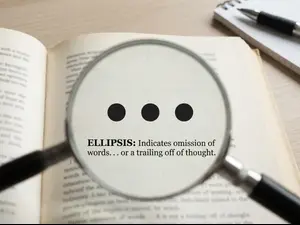
ellipsis
[ih-lip-sis]
omission of one or more words that are obviously understood but must be supplied to make a construction grammatically complete.

complacency
[kuhm-pley-suhn-see ]
a feeling of quiet pleasure or security, often while unaware of some potential danger, defect, or the like; self-satisfaction or smug satisfaction with an existing situation, condition, etc.

dilapidated
[dih-lap-i-dey-tid]
reduce to or fallen into partial ruin or decay, as from age, wear, or neglect

bonfire
[bon-fahy-er]
a large open-air fire, typically used for celebration

flatten
[fl-att-en]
to make something level, smooth, or less prominent.

pusillanimous
[pyoo-suh-lan-uh-muhs]
lacking courage or resolution; cowardly; faint-hearted; timid

flowery
[flow-er-ee]
decorated with flowers; overly elaborate in style

onset
[on-set-set]
the early stages of something

tisane
[ti-zan]
aromatic or herb-flavored tea

abject
[ab-jekt]
(of something bad) experienced or present to the maximum degree

lugubrious
[loo-goo-bree-uhs]
mournful, dismal, or gloomy, especially in an affected, exaggerated, or unrelieved manner

lotion
[l-oshun]
a liquid or cream applied to the skin for moisturizing or healing.

emollient
[ih-mol-yuhnt]
having the power of softening or relaxing, as a medicinal substance; soothing, especially to the skin

ablate
[a-bleyt]
to remove or dissipate by melting, vaporization, erosion, etc.

misunderstand
[m-is-und-erst-and]
to fail to correctly interpret or comprehend something.