urbane
adjectivehaving the polish and suavity regarded as characteristic of sophisticated social life in major cities
What Makes This Word Tick
"Urbane" dances with a sophisticated rhythm. It describes someone who possesses certain smoothness in manner or style, often seen in those who move effortlessly in society's upper echelons. It's all about that polished exterior and suave demeanor that impresses onlookers with seemingly no effort. Picture a person who always has the perfect thing to say, at just the right moment.
If Urbane Were a Person…
Imagine a person who sips their coffee with the utmost grace, engages effortlessly in conversations ranging from global politics to the latest in theater, and navigates social gatherings as if they're hosting their own personal soirée. Urbane is that friend who knows which fork to use at a fancy dinner and always, always remembers names.
How This Word Has Changed Over Time
Originally, "urbane" had a more literal meaning, rooted in the city. It described those living in urban settings – people who were polished by the very nature of their cosmopolitan surroundings. Over time, the rough edges of this word were smoothed out to describe anyone who carries that city slicker charm, regardless of their address.
Old Sayings and Proverbs That Use Urbane
While "urbane" itself doesn't appear directly in many old sayings, its essence comes through in phrases like "manners maketh man," which speaks to refinement and grace - attributes inherent to the urbane spirit. In some ways, it's reflected in the ancient expectation that city dwellers exhibit a certain polish unlike their rural counterparts.
Surprising Facts About Urbane
Did you know that the word shares its roots with "urban"? While today they travel in different social circles (one literal, the other metaphorical), they both derive from the Latin "urbanus," which means "of the city." It's a testament to how certain terms evolve from concrete locations to abstract concepts of sophistication.
Out and About With This Word
Urbane is your go-to descriptor when attending a jazz night, mingling at art gallery openings, or referencing that silver-tongued guest who turned a regular dinner party into an unforgettable evening. It's a word that loves the city life and all its refined trappings.
Pop Culture Moments Where Urbane Was Used
Think of those classic movie characters-James Bond or Cary Grant in many of his films-whose charisma and polished conduct make them stand out. These are the epitome of urbane, embodying the grace and sophistication the word suggests, making them enduring icons of style and charm.
The Word in Literature
In literature, "urbane" is often used to describe characters who move with ease through societal settings, as seen in the works of authors like F. Scott Fitzgerald. It's a word that thrives in tales of high society, where a cutting remark might be delivered with a charming smile and a glass of champagne.
Moments in History with Urbane
Picture the salons of Paris, where the urbane mingled with thinkers, writers, and artists, or the roaring '20s, when the urbane were dancing the Charleston. Historical figures like Oscar Wilde or Truman Capote embody urbane attributes with their wit and social prowess.
This Word Around the World
While its English counterpart suggests city sophistication, similar concepts exist globally. In France, they might speak of someone as "raffiné," while in Italy, the word could be "sofisticato." Different cultures have their own nuances, but the global love for polished charm remains universal.
Where Does It Come From?
"Urbane" traces back to Latin origins, shared with "urban." The root, "urbanus," was used by Ancient Romans to describe city dwellers and the sophisticated lifestyle associated with them. It's a word that has traveled through time, evolving from its geographic origins to describe polished elegance.
How People Misuse This Word
Sometimes "urbane" can be confused with "urban" because of their shared etymology. However, using "urbane" to mean simply "from the city" can miss the mark; it implies more of a personality trait than just city origins.
Words It's Often Confused With
- Urban: Relates to, or characteristic of, a city or town, not to be mistaken for personality traits.
- Sophisticated: While close in meaning, "sophisticated" implies more complexity, which doesn't always equate to the urbane ease.
- Polished: Could suggest refinement, but lacks the nuance of personality found in "urbane."
Additional Synonyms and Antonyms
Synonyms include suave, sophisticated, polished, and refined. Antonyms would be uncouth, clumsy, or rustic-terms that suggest a lack of the social graces needed to glide effortlessly through life's social functions.
Want to Try It Out in a Sentence?
After spending years traveling and experiencing different cultures, Jenna had an urbane charm that made her the ideal guest at any party, seamlessly blending anecdotes with witty repartees.
Explore more words

11 Dumbest Things Middle-Class Americans Waste Money On
See what to cut →

cringle
[krin-gul]
a reinforced loop in a sail used to attach ropes
ample
[am-pul]
more than enough; abundant

Little-Known Money Hacks That Could Save You Hundreds
Review the list →

Is Staying With the Same Insurer Costing You More?
Explore Your Options →

audacious
[aw-dey-shuhs]
showing a willingness to take surprisingly bold risks
gallop
[gal-uhp]
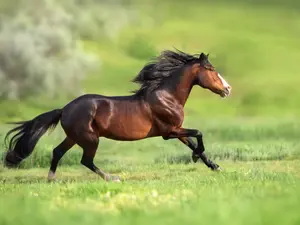
to ride a horse at a gallop; ride at full speed

These 10 Money Moves Could Save Seniors Hundreds
Read more →
piquant
[pee-kuhnt]
agreeably pungent or sharp in taste or flavor; pleasantly biting or tart

blatantly
[bley-tuhnt-lee]
doing something in a very obvious, open way, without trying to hide it.

bereft
[bih-reft]
deprived
idolize
[ahy-duh-lahyz]
to admire or love someone excessively

mordant
[mawr-dnt]
sharply caustic or sarcastic, as wit or a speaker; biting

banal
[buh-nal]
devoid of freshness or originality; hackneyed; trite

repertory
[rep-er-tawr-ee]
a type of theatrical presentation in which a company presents several works regularly or in alternate sequence in one season

gargantuan
[gahr-gan-choo-uhn]
gigantic; enormous; colossal