
zilch
noun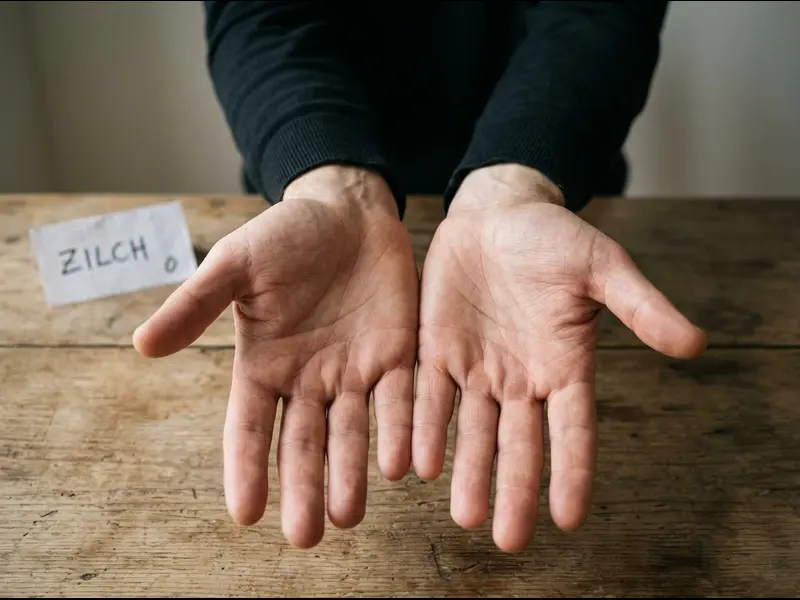
nothing; zero.
What Makes This Word Tick
Zilch means nothing at all—zero of the thing you hoped to find or get. It’s blunt and definitive, often used for emphasis when the result is empty or disappointing. Compared with “nothing,” zilch can sound more punchy and final.
If Zilch Were a Person…
Zilch would be the friend who shows up with empty hands and an honest shrug. They’re not dramatic—just unmistakably absent. Being around them feels like opening a box and finding only air.
How This Word Has Changed Over Time
Zilch has stayed closely tied to the idea of zero or nothingness, especially in informal or emphatic speech. Modern usage still favors it when someone wants to underline that the amount is absolutely none.
Old Sayings and Proverbs
A proverb-style idea that matches zilch is that you can’t get something from nothing. That reflects the meaning because zilch marks the point where the total is zero—no hidden extras waiting to appear.
Surprising Facts
Zilch is often used after verbs like “got,” “found,” or “know,” because it highlights a total lack of results or knowledge. It’s also common in casual talk to add emphasis without sounding formal. The word’s crisp sound helps it land like a verdict.
Out and About With This Word
You’ll often see zilch in everyday conversations about outcomes—money, progress, evidence, or answers—when the amount is zero. It also appears in humorous or frustrated storytelling when someone expected more and got none. The word fits best when you want “zero” to feel personal and emphatic.
Pop Culture Moments Where Zilch Was Used
In pop culture, the idea of zilch often shows up in punchlines and setbacks: characters chase a reward and end up with nothing to show for it. That reflects the meaning because zilch is the dramatic, definitive “zero” at the end of the effort.
The Word in Literature
In literary writing, zilch is often used in dialogue or a casual narrative voice to make “nothing” feel sharp and immediate. It can add comic sting or blunt finality without extra explanation. For readers, it signals an emphatic absence—no results, no amount, no remainder.
Moments in History with Zilch
The concept fits any situation where people tally resources or outcomes and discover the count is zero—no supplies, no votes, no evidence, no payoff. That aligns with the definition because zilch is simply the total absence of something.
This Word Around the World
Across languages, this idea is usually expressed through words that mean nothing, none, or zero, sometimes with slang equivalents for extra emphasis. Expression varies by language and register, but the sense is the same: a total of nothing.
Where Does It Come From?
Zilch is commonly associated with 20th-century slang, and its informal feel still shows in how people use it for emphasis. The origin is not fully pinned down here, but the modern meaning is clear and stable.
How People Misuse This Word
Zilch sometimes gets used when someone really means “very little,” but the definition is absolute: nothing, zero. If the amount is small but not zero, “hardly anything” or “next to nothing” is usually more accurate.
Words It’s Often Confused With
Zilch is often confused with nil, but nil sounds more formal while zilch is more punchy and casual. It’s also confused with none, which is neutral, while zilch usually adds emphasis.
Additional Synonyms and Antonyms
Additional Synonyms: naught, nothingness, zero sum Additional Antonyms: some, plenty, abundance
Want to Try It Out in a Sentence?
"After checking every pocket, he found zilch but lint."
Explore more words

zeitgeist
[tsahyt-gahyst]
the defining spirit or mood of a particular period of history as shown by the ideas and beliefs of the time

cumulative
[kyoo-myuh-luh-tiv]
increasing or growing by accumulation or successive additions



conterminous
[kuhn-tur-muh-nuhs]
having a common boundary
copious
[koh-pee-uhs]
large in quantity or number; abundant; plentiful


obsequious
[uhb-see-kwee-uhs]
characterized by or showing servile obedience and excessive eagerness to please; deferential; fawning:

skulk
[skuhlk]
to lie or keep in hiding, as for some evil reason

paucity
[paw-si-tee]
smallness of quantity; scarcity; scantiness
criterion
[krahy-teer-ee-uhn]
a standard of judgment or criticism; a rule or principle for evaluating or testing something

winebibber
[wahyn-bib-er]
a person who drinks a lot wine

quell
[kwel]
to suppress; put an end to; extinguish

acerbic
[uh-sur-bik ]
sour or astringent in taste

frosty
[fr-osty]
cold enough to produce frost; also used to describe unfriendly or distant behavior.

obfuscation
[aab-fuh-skay-shn]
the act or an instance of making something obscure, dark, or difficult to understand

jarring
[jar-ing]
incongruous or discordant in nature; producing a harsh, unpleasant, or discordant sound or effect.
horrible
[hawr-uh-buhl]
causing horror; extremely unpleasant

sordid
[sawr-did]
morally ignoble or base; vile