conflagration
nouna destructive fire, usually an extensive one
What Makes This Word Tick
"Conflagration" refers to a large and destructive fire. It conjures up images of roaring flames, crackling wood, and the smoky aftermath that follows. It's the kind of fire that doesn't just warm your hands but threatens to engulf everything in its path.
If Conflagration Were a Person…
If conflagration were a person, they'd be the dramatic type-a fiery artist with a flair for turning heads. They'd walk into a room, and all eyes would turn, a mix of magnetism and a bit of nervousness hovering around.
How This Word Has Changed Over Time
Originally from the Latin "conflagrationem," meaning "a burning up," the term has remained consistent in its use to describe intense and destructive fires. Its usage has expanded metaphorically over time to describe any rapidly spreading situation, such as a conflict or crisis.
Old Sayings and Proverbs That Use Conflagration
While specific sayings might not feature "conflagration," the concept of fire as destruction is age-old. Phrases like "adding fuel to the fire" capture the essence of something that intensifies an already volatile situation.
Surprising Facts About Conflagration
"Conflagration" isn't just for literal fires; it often appears in political and social commentary. Writers have applied the word to revolutions and wars, giving an almost cinematic feel to the chaos described.
Out and About With This Word
Next time you're at the beach with a bonfire flickering, test out the word "conflagration" to see just how fitting it could be for the scenario-though hopefully in a controlled, not-so-destructive way!
Pop Culture Moments Where Conflagration Was Used
In cinematic history, the word has plenty of screen time in disaster and war films. Think of those voiceovers talking about a city or country "in the throes of conflagration," adding gravitas to the visuals.
The Word in Literature
"Conflagration" appears in novels to set a scene heavy with drama. You might spot it in works describing wars or dystopian futures, where authors need a potent word to capture the magnitude of what's unfolding.
Moments in History with Conflagration
The Great Chicago Fire of 1871 or the 1666 Great Fire of London can both be described using "conflagration." These events were not just literal blazes but turning points in the cities' histories, reshaping their futures.
This Word Around the World
In French, "conflagration" closely resembles its English counterpart but carries more of a war-related meaning. In other contexts, like Russian or Spanish, translating to a word that means "big fire" would capture the essence perfectly.
Where Does It Come From?
Its Latin roots lie in the words "com-" meaning together and "-flagrare" meaning to burn, aptly describing a fire that spreads and consumes collectively.
How People Misuse This Word
People might use "conflagration" to refer to a regular campfire or a small kitchen mishap. Both are a bit of an overstatement unless you're cooking for a hundred guests with a flamethrower.
Words It's Often Confused With
- Inferno: Often used interchangeably but implies a hellish or intensely hot fire.
- Blaze: A more general term for a fire which lacks the scale of destructiveness that "conflagration" implies.
- Firestorm: A complex of fires causing a storm effect, not merely a large fire.
Additional Synonyms and Antonyms
Synonyms include "inferno" and "holocaust" (in the context of destruction), while antonyms might be "extinguishment" or "calm."
Want to Try It Out in a Sentence?
As the fireworks display went awry, what was intended to be a joyous celebration quickly turned into a fiery conflagration that illuminated the night sky with unintended peril.
Explore more words
11 Dumbest Things Middle-Class Americans Waste Money On
See what to cut →

bassinet
[bas-uh-net]
a basket with a hood over one end, for use as a baby's cradle

coruscation
[kawr-uh-skey-shuhn]
the act of coruscating; a sudden gleam or flash of light; a striking display of brilliance or wit

Little-Known Money Hacks That Could Save You Hundreds
Review the list →

Is Staying With the Same Insurer Costing You More?
Explore Your Options →
abgesang
[ab-guh-zong]
the concluding section in musical and poetic bar form

antibiotic
[an-tahy-bahy-ot-ik]
a substance used to kill or inhibit bacteria

These 10 Money Moves Could Save Seniors Hundreds
Read more →

remonstrate
[ri-mon-streyt]
to say or plead in protest, objection, or disapproval

trousseau
[troo-soh]
an outfit, clothing, or linen for a bride

ardent
[ar-dent]
passionate or enthusiastic

ichor
[ahy-kawr]
from Classical Mythology: the blood of the gods

whimsical
[hwim-zi-kuhl]
given to whimsy, capricious humor, excessively playful expression, or fanciful notions; capricious

skulk
[skuhlk]
to move in a stealthy manner; slink
clinometer
[klahy-nom-i-ter]
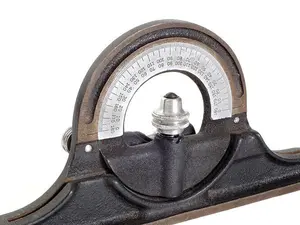
an instrument used for measuring the angle or elevation of slopes

akimbo
[uh-kim-boh]
with hands on the hips and elbows turned outward