
moot
adjectiveof little or no practical value, meaning, or relevance; purely academic
What Makes This Word Tick
"Moot" is one of those words that wears multiple hats, depending on context. It can refer to a debatable point that no longer impacts the current situation, or a subject up for discussion - though the latter usage has dwindled a bit in American English. Its history of being both an adjective and a verb just adds to its delightful complexity.
If Moot Were a Person…
Moot would be that thoughtful friend you call when you need to hear both sides of an argument. They're inquisitive, charmingly persistent, and always ready to toss in a "What if?" during the most serious of debates - even if sometimes those debates are yesterday's news.
How This Word Has Changed Over Time
In its early days, "moot" was all about meetings and discussions among the Anglo-Saxons. Over time, especially in the U.S., it shifted to describe topics that seem hypothetically interesting but aren't practically relevant anymore. Across the pond, though, it can still mean an issue open for debate.
Old Sayings and Proverbs That Use Moot
While "moot" isn't the star of many age-old sayings, one might hear, "That's a moot point," a dismissive nod to topics neither here nor there. It's the linguistic equivalent of "Why bother?"
Surprising Facts About Moot
Did you know "moot" was once a serious legal term in England, where law students practiced their craft by debating hypothetical cases? This was known as a "moot court." It's not just a word; it's practically a senior partner in legal reasoning history.
Out and About With This Word
Take "moot" for a spin in some university law circles, and you'll find it thrives in moot courts with eager students arguing over pretend cases. In the wild of everyday conversations, it chimes in most when debates become a bit academic or irrelevant.
Pop Culture Moments Where Moot Was Used
"Moot" makes a guest appearance in courtroom dramas and legal thrillers, where its roots in law get to shine. It's easy to imagine a dramatic scene where someone declares, "Your Honor, the point is moot!" causing gasps all around the room.
The Word in Literature
You might spot "moot" lingering in legal novels or philosophical essays where debates tread between practicality and fascinating-but-irrelevant tangents. It's a great companion for stories that thrive on intellectual sparring.
Moments in History with Moot
The term "moot" might have perfectly described the Treaty of Versailles discussions. As world leaders debated the terms, some points surely lost relevance in the face of evolving political landscapes - making them, well, moot.
This Word Around the World
While ringing familiar in English-speaking regions, "moot" might not find the same spotlight elsewhere. In Germany, for instance, discussions might instead hinge on "Streitfrage" for contentious topics, which carry a more combative connotation.
Where Does It Come From?
The origins of "moot" take us back to the Old English "mōt," meaning assembly or council. The legal tradition of holding moot courts has carved its path through centuries, leaving behind the echo of debate in its wake.
How People Misuse This Word
Many confuse "moot" with meaning purely debatable versus irrelevant, leading to the grammar police pulling them over. It's a classic case of U.K. versus U.S. English semantics, leaving some readers scratching their heads.
Words It's Often Confused With
- Mute: Muteness involves silence, which seems miles away from "moot" debates.
- Moat: Hard to discuss when one has a castle's moat in mind, rather than a courtroom debate.
- Mood: Oh, the dramatic difference! One is abstract debate; the other, an emotional state.
Additional Synonyms and Antonyms
Synonyms include: irrelevant, academic, debatable. Antonyms are: relevant, pertinent, significant.
Want to Try It Out in a Sentence?
When the committee realized the project funding was already secured, discussions about possible budget cuts became moot.
Explore more words

11 Dumbest Things Middle-Class Americans Waste Money On
See what to cut →

euclidean
[yoo-klid-ee-uhn]
of or relating to the system of geometry based on the work of Euclid and corresponding to the geometry of ordinary experience

scamper
[skam-per]
to run or go hastily or quickly

Little-Known Money Hacks That Could Save You Hundreds
Review the list →

Is Staying With the Same Insurer Costing You More?
Explore Your Options →

tortuous
[tawr-choo-uhs]
full of twists, turns, or bends; twisting, winding, or crooked

candy
[kan-dee]
a sweet food made with sugar and often flavoring (such as chocolate) and filling

These 10 Money Moves Could Save Seniors Hundreds
Read more →

mournful
[morn-ful]
feeling or expressing sorrow or grief

belated
[bih-ley-tid]
coming or being after the customary, useful, or expected time

disappear
[dis-uh-peer]
to cease to be visible or exist

glumly
[gluhm-lee]
in a dismal, dreary, or gloomy manner.

fractious
[frak-shuhs]
readily angered; peevish; irritable; quarrelsome:

prop
[pr-op]
an object used for support or as part of a performance; also refers to giving assistance or reinforcement.

dissimulate
[dih-sim-yuh-leyt]
to disguise or conceal under a false appearance; dissemble

matter
[m-att-er]
a substance or material; also refers to an issue or topic under consideration.

amenable
[uh-mee-nuh-bul]
open to suggestion; easily persuaded or controlled

victorious
[vik-tawr-ee-uhs]
having achieved victory; conquering; triumphant
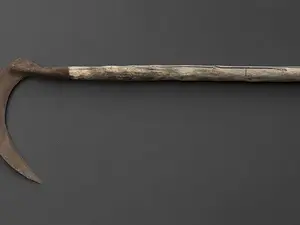
scythe
[sahyth]
an agricultural tool with a long, curving blade that sits at an angle on the handle
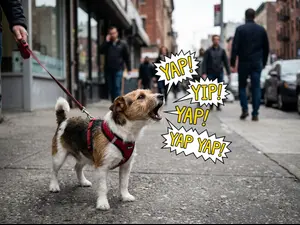
yap
[y-ap]
to bark sharply or shrilly, often referring to small dogs; also used informally for talking excessively.