
prolific
adjectiveproducing in large quantities or with great frequency; highly productive
What Makes This Word Tick
"Prolific" is one of those words that just sounds busy, doesn't it? It describes someone or something that produces much output or activity with great frequency. Imagine a garden, and now imagine that garden sprouting flowers left, right, and center - that's what "prolific" feels like in action.
If Prolific Were a Person…
Oh, if "prolific" were a person, they'd be that neighbor who's constantly juggling projects – baking cookies, writing novels, and knitting scarves all at once. They'd be overflowing with energy and creativity, the epitome of multitasking and achieving.
How This Word Has Changed Over Time
Originally from the Latin "prolificus," this word has stayed quite true to its roots. Over the centuries, "prolific" has always carried a sense of abundance, whether referring to literature in the 19th century or software developers today.
Old Sayings and Proverbs That Use Prolific
While proverbs using "prolific" specifically are rare, its spirit shines through in sayings like "Busy as a bee" or "Make hay while the sun shines." Both reflect that sense of constant productivity and creativity that "prolific" embodies.
Surprising Facts About Prolific
Here's a fun fact: "prolific" is often associated with creative minds, but did you know it can also refer to fruitful plants and ideas nurtured in the scientific community? It's a favorite word in agriculture and biology to describe lush growth or abundant research output.
Out and About With This Word
In casual conversation, "prolific" might be tossed around in coffee shops and book clubs, often describing a favorite author or a musician who churns out hits like a factory. When you hear it, expect the topic of discussion to be producing in spades.
Pop Culture Moments Where Prolific Was Used
The modern world is full of prolific artists and creators. Take Taylor Swift, known for being prolific in her music writing and album releases. Or consider a film director like Quentin Tarantino, often labeled prolific because of his intense creative output.
The Word in Literature
"Prolific" often shows up in literary reviews and critiques, especially when an author is lauded for their vast collection of works. It's the type of word you'd find in enthusiastic introductions of prolific authors like Stephen King or Nora Roberts.
Moments in History with Prolific
Think of the Renaissance, a time when the air was thick with creativity, and ideas were as prolific as the art and literature being born. The term fits beautifully, capturing the bustling creativity of figures like Leonardo da Vinci or Michelangelo.
This Word Around the World
In French, "prolifique" carries the same meaning, while in Spanish, it's "prolífico." Across cultures, the word often feeds into the concept of abundance and flourishing, whether in art, science, or nature.
Where Does It Come From?
"Prolific" has roots in the Latin word "proles," meaning offspring. It evolved in the 17th century, initially tied to producing offspring or fruit. Over time, it came to represent any form of plentiful production.
How People Misuse This Word
People sometimes mix up "prolific" with "profound," using it to suggest depth of thought rather than the quantity of output. Remember, prolific is all about producing plenty, not necessarily delving deep.
Words It's Often Confused With
- Profound: While profound refers to deep insight or thought, prolific is about quantity of output.
- Proficient: This means skilled or competent in doing something, not the same as being highly productive.
- Profuse: Relating more to abundance in giving, such as gratitude or praise, rather than production of works.
Additional Synonyms and Antonyms
- Synonyms: Productive, fertile, creative
- Antonyms: Unproductive, barren, sparse
Want to Try It Out in a Sentence?
Here's a quick one for you: "The prolific artist held her twentieth exhibition this year, dazzling visitors with her boundless creations."
Explore more words
11 Dumbest Things Middle-Class Americans Waste Money On
See what to cut →

tenable
[ten-uh-buhl]
capable of being held, maintained, or defended, as against attack or dispute

boba
[boh-buh]
a sweet drink of taiwanese origin that consists of tea mixed typically with milk or fruit syrup and small balls of tapioca.

Little-Known Money Hacks That Could Save You Hundreds
Review the list →

Is Staying With the Same Insurer Costing You More?
Explore Your Options →

sordid
[sawr-did]
morally ignoble or base; vile

conspicuous
[kuhn-spik-yoo-uhs]
attracting special attention, as by outstanding qualities or eccentricities

These 10 Money Moves Could Save Seniors Hundreds
Read more →

cringle
[krin-gul]
a reinforced loop in a sail used to attach ropes

cavil
[kav-uhl]
to raise irritating and trivial objections; find fault with unnecessarily

defenestrate
[dee-fen-uh-streyt]
to suddenly remove (a person) from an important position or office
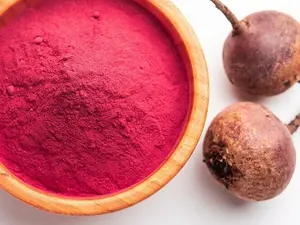
triturate
[trich-uh-reyt]
to reduce to fine particles or powder by rubbing, grinding, bruising, or the like; pulverize

defer
[dih-fer]
to postpone or delay something; to yield to someone
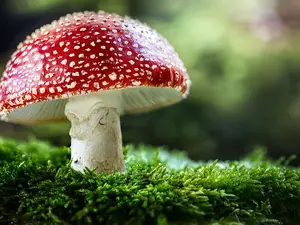
toadstool
[toad-stool]
a kind of fungus similar to a mushroom, consisting of a round cap on a short stem, and that is often poisonous

beast-like
[beest-like]
resembling or behaving like a beast

being
[bee-ing]
existence or the nature or essence of a person

diffidence
[dif-i-duhns]
modesty or shyness resulting from a lack of self-confidence

hurtle
[hur-tl]
to rush violently; move with great speed

wrangle
[rang-guhl]
to tend or round up (cattle, horses, or other livestock)

magnanimous
[mag-nan-uh-muhs]
generous in forgiving an insult or injury; free from petty resentfulness or vindictiveness