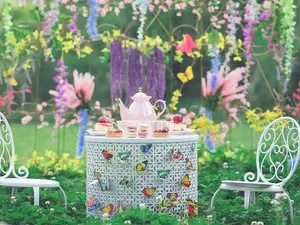
quaint
adjectiveattractively old-fashioned or unusual
What Makes This Word Tick
Quaint describes something old-fashioned or unusual in a charming way. It often applies to places, customs, houses, shops, streets, or objects that feel pleasantly out of step with the present. The word balances strangeness with appeal.
If Quaint Were a Person…
Quaint would write letters by hand, keep flowers in a chipped pitcher, and know every shopkeeper by name. They would not be modern in the usual sense. Their charm would come from seeming gently out of time.
How This Word Has Changed Over Time
Quaint comes from Old French cointe, meaning elegant or clever, from Latin cognitus, meaning known. Over time, the word moved toward the sense of unusual old-fashioned charm. Today, quaint often praises what feels charmingly old or peculiar.
Old Sayings and Proverbs
Quaint is not commonly found in traditional proverbs, but its meaning fits old praise for simple charm. An imagined proverb-like line might be: "A quaint lane remembers what broad roads forget." It suggests that old-fashioned places can hold a special kind of appeal.
Surprising Facts
Quaint can be affectionate, but it can also sound slightly patronizing. Calling a village quaint may praise its charm, but calling an idea quaint may imply it is outdated. Context decides whether the word feels warm or dismissive.
Out and About With This Word
You can use quaint for villages, cottages, customs, cafes, streets, shops, and old tools. It fits travel writing, real estate descriptions, history walks, and personal memories. Use it when unusual old-fashioned charm is the main effect.
Pop Culture Moments Where Quaint Was Used
It would fit naturally alongside Paddington, where old-fashioned courtesy and cozy settings create gentle charm. It also suits Gilmore Girls, where small-town life and unusual local traditions shape the atmosphere. In both cases, quaint describes old-fashioned charm with a touch of peculiarity.
The Word in Literature
In literature, quaint suits villages, houses, customs, and objects that seem charmingly out of date. It can make a setting feel intimate, old, and slightly unusual. The word gives old-fashioned detail a warm glow.
Moments in History with Quaint
In a cobblestone village, old market square, or preserved cottage, quaint can describe places that feel attractively old-fashioned. The setting makes the past visible. The word keeps attention on charm rather than mere age.
This Word Around the World
Many languages have ways to praise old-fashioned charm. Quaint gives English a compact word for what is unusual, old, and attractive at once. It is useful when modern is not the goal.
Where Does It Come From?
Quaint comes from Old French cointe, meaning "elegant" or "clever," from Latin cognitus, meaning "known." That origin helps explain the word's older sense of skill or refinement. In modern English, quaint means attractively old-fashioned or unusual.
How People Misuse This Word
Quaint should not be used for anything old. An old building may be plain, broken, or unpleasant. Quaint works best when old-fashioned or unusual qualities feel attractive.
Words It's Often Confused With
Quaint can be confused with old-fashioned, but old-fashioned can be neutral or negative. It can also overlap with peculiar, though quaint usually adds charm. The word makes unusualness appealing.
Additional Synonyms and Antonyms
Additional synonyms: charming old-style, curious, rustic, storybook-like Additional antonyms: sleek, current, standard, up-to-date
Want to Try It Out in a Sentence?
The quaint village was full of charming cobblestone streets and historic cottages.
Explore more words

11 Dumbest Things Middle-Class Americans Waste Money On
See what to cut →

act
[akt]
to take action or perform a role in a play or situation

talisman
[tal-is-muhn]
a stone, ring, or other object, engraved with figures or characters supposed to possess occult powers and worn as an amulet or charm

Little-Known Money Hacks That Could Save You Hundreds
Review the list →

Is Staying With the Same Insurer Costing You More?
Explore Your Options →

malaise
[ma-leyz]
a general feeling of discomfort, illness, or uneasiness whose exact cause is difficult to identify

ichor
[ahy-kawr]
from Classical Mythology: the blood of the gods

These 10 Money Moves Could Save Seniors Hundreds
Read more →

clumsy
[klum-zee]
awkward in movement or handling things

colossal
[kuh-los-ul]
extremely large or impressive

pervading
[pur-vey-ding]
spreading throughout; permeating.
insatiable
[in-sey-shuh-buhl]
not satiable; incapable of being satisfied or appeased

commensurate
[kuh-men-ser-it]
corresponding in amount, magnitude, or degree

gape
[gayp]
to stare with an open mouth in amazement

aspergillum
[as-per-jil-uhm]
a brush or instrument for sprinkling holy water

vociferate
[voh-sif-uh-reyt]
to speak or cry out loudly or noisily; shout; bawl