
vanguard
nounthe forefront in any movement, field, activity, or the like
What Makes This Word Tick
"Vanguard" carries a certain panache, calling to mind images of leaders blazing a trail. It originates from military parlance, indicating troops moving at the forefront of an army. Today, it's a little less combative, often used to describe those who lead new ideas, movements, or technologies. A powerful word with a forward-thinking vibe that's never out of style!
If Vanguard Were a Person…
Picture a fearless explorer, always marching ahead and breaking ground where no one has tread before. This person relishes novelty, thrives on challenges, and has a wardrobe of adventure-ready gear. They are the embodiment of innovation, never one to stand idly by as the world passes.
How This Word Has Changed Over Time
Originally, "vanguard" was all about soldiers and shields, the critical line of defense. Over the centuries, its use has softened but not lost its edge, evolving to describe anyone who pioneers in non-military fields-be it art, science, or social change.
Old Sayings and Proverbs That Use Vanguard
While "vanguard" isn't a staple of traditional proverbs, the spirit of leading and pioneering is timeless. Sayings like "the early bird catches the worm" capture similar sentiments about being at the forefront and leading the charge.
Surprising Facts About Vanguard
A fascinating tidbit: "Vanguard" shares etymological roots with "avant-garde," which comes from French and has a similar meaning. Despite its militaristic origins, "vanguard" is frequently used in the arts to describe groundbreaking groups or leaders.
Out and About With This Word
You'll find "vanguard" mingling in artistic circles, technology expos, and startup incubators. It loves shindigs where discussions about the future are the main course, and new ideas are savored like fine wine.
Pop Culture Moments Where Vanguard Was Used
The word has appeared in numerous films and books showcasing leadership and innovation. Think of movies about rebellious bands or autobiographies of inventive leaders, where vanguardism is at the heart of the storyline.
The Word in Literature
Authors favor "vanguard" when describing characters who lead revolutions or movements. It can easily appear in narratives exploring themes of rebellion and progress, especially in futuristic or dystopian novels where characters challenge the status quo.
Moments in History with Vanguard
In the 1960s, civil rights leaders stood at the vanguard of social change, pushing boundaries and advancing human rights. Similarly, the tech boom of the late 20th century saw innovators and early adopters at the vanguard of the digital age.
This Word Around the World
Internationally, the essence of a vanguard is a universal concept. In French, "avant-garde" captures a similar meaning, while in Spanish, "vanguardia" carries the same sense of leading the charge and breaking new ground.
Where Does It Come From?
Tracing its roots to the Old French "avant-garde," meaning "fore guard," this word journeyed through the centuries, evolving from a martial term to a metaphorical expression of leadership and innovation.
How People Misuse This Word
Sometimes people use "vanguard" when they mean "pioneer," though they overlap, pioneers often break paths, while vanguards lead established movements. Missteps often occur in mixing these subtle distinctions.
Words It's Often Confused With
- Avant-garde: Often confused due to their similar meanings, though avant-garde leans more artistic.
- Pioneer: Both indicate leadership, but "pioneer" is more about being the first.
- Leader: While all vanguards are leaders, not all leaders are vanguards, making it important to distinguish.
Additional Synonyms and Antonyms
Synonyms include forerunner, trailblazer, front-runner. Antonyms might be follower, laggard, rear.
Want to Try It Out in a Sentence?
"In the vanguard of the environmental movement, she advocated for policies that would sustain our planet for future generations."
Explore more words

11 Dumbest Things Middle-Class Americans Waste Money On
See what to cut →

redoubtable
[ri-dou-tuh-buhl]
that is to be feared; formidable

piggyback
[pig-ee-bak]
to attach or ally to as or as if part of the same thing

Little-Known Money Hacks That Could Save You Hundreds
Review the list →

Is Staying With the Same Insurer Costing You More?
Explore Your Options →

prototypical
[proh-tuh-tip-i-kuhl]
illustrating the typical qualities of a class, group, etc.

quizzical
[kwiz-i-kuhl]
expressing puzzlement or mild amusement

These 10 Money Moves Could Save Seniors Hundreds
Read more →
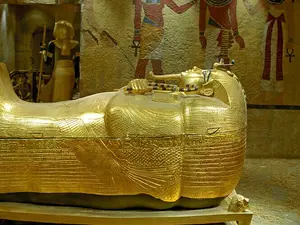
sarcophagus
[sahr-kof-uh-guhs]
a stone coffin, typically adorned with a sculpture or inscription and associated with the ancient civilizations of Egypt, Rome, and Greece

politeness
[puh-lahyt-nes]
behavior that is respectful and considerate of others

regretful
[ri-gret-fuhl]
feeling or showing regret or sorrow

loquacity
[loh-kwa-si-tee]
the quality of talking a great deal; talkativeness

insurgent
[in-sur-juhnt]
of or characteristic of an insurgent or insurgents

predestination
[pre-des-ti-nay-shun]
the belief that all events are determined in advance by fate

rarity
[r-ar-ity]
the state or quality of being uncommon or unique.

incidence
[in-si-duhns]
the rate or range of occurrence or influence of something, especially of something unwanted

porphyry
[pawr-fuh-ree]
any igneous rock containing coarse crystals, as phenocrysts, in a finer-grained groundmass

centralize
[k-entr-al-iz-e]
to bring activities, processes, or power under a single authority or location.

besmirch
[bih-smurch]
to detract from the honor or luster of

angst
[angkst]
a feeling of deep anxiety or dread