
cavil
verbto raise irritating and trivial objections; find fault with unnecessarily
What Makes This Word Tick
"Cavil" is a word with a bit of sass-it's all about nitpicking and quibbling over minor issues. Whether it's critiquing the crookedness of a picture frame or the exact shade of mauve on a wall, to "cavil" is to raise objections that are often trivial and sometimes seen as unnecessary. It's the perfect word for that point when someone's details make you want to roll your eyes.
If Cavil Were a Person…
If "cavil" walked among us, it would be the fussy friend at the restaurant who points out that the soup is a degree too hot or the waitress mispronounced "quinoa." They mean well, with a meticulous eye for detail, but sometimes they might miss the forest for the trees, stuck as they are on straggling branches.
How This Word Has Changed Over Time
The essence of "cavil" hasn't drifted too far from its original path over the centuries. In Middle English, derived via Old French and from Latin "cavilla" meaning "mockery," its roots have kept it quite consistent. Though sometimes mistaken for more malicious forms of complaint, "cavil" retains its lighter, fussier connotation.
Old Sayings and Proverbs That Use Cavil
This word isn't one that pop up frequently in old sayings or proverbs, but the sentiment behind it echoes in phrases like "making a mountain out of a molehill." Finding faults where none need fixing, just for the sake of the fuss itself.
Surprising Facts About Cavil
"Cavil" shares its roots with the word "cavillous," an almost forgotten cousin coming from the same Latin lineage. It's a specialist term, seldom heard but joyously specific-used for those who revel in their quibbles.
Out and About With This Word
While not one you might overhear on a buzzing street corner, "cavil" has its niche, often woven into the fabric of literary critiques and editorials. It finds its place in circles where debate over the finer points is a cherished pastime.
Pop Culture Moments Where Cavil Was Used
While "cavil" might not headline the Billboard charts, it's appeared in the dialogue of erudite TV characters-the types who swoon over arguments about grammar or the historical accuracies in period dramas. Think of it as a word Mr. Darcy might mutter under his breath.
The Word in Literature
For lovers of classic literature, "cavil" might sidle in among Victorian novels, offering its name to those familiar, endearing scenes of well-heeled drawing rooms where idle chatter masked subtle critiques-a verbal fencing match of sorts.
Moments in History with Cavil
Imagine the Constitutional Convention of 1787-men in wigs debating the ins and outs of governance. "Cavil" would have fit right in as those bright minds quarreled over clauses and commas, striving for enduring perfection.
This Word Around the World
While the exact English term doesn't perfectly translate worldwide, the act of caviling is universal. In France, one might encounter "chicaner," and in Italian, "cavillare," each with its unique cultural flair but similar verbal dance.
Where Does It Come From?
Etymologically nestled in Latin, it branched through Old French into English, keeping close to its roots of "mockery" or "raillery." It's one of those linguistics travelers that carried its original baggage with pride.
How People Misuse This Word
Some might confuse "cavil" with complaints of a more serious nature, missing the subtlety that "cavil" suggests-it's about trivial points, not grievous faults. It's the difference between noting a painting's skewed angle versus its lack of artistic merit.
Words It's Often Confused With
- Quibble: Both involve arguing over minor details, but "quibble" often leans toward a disagreement for its own sake.
- Nitpick: Almost interchangeable, yet "nitpick" often carries an even narrower focus on trivial imperfections.
- Complain: Broader and more serious than caviling, often related to significant issues or grievances.
Additional Synonyms and Antonyms
Synonyms for "cavil" include "carp," "niggle," and "fuss." Conversely, antonyms would be "applaud," "approve," and perhaps most fittingly, "overlook."
Want to Try It Out in a Sentence?
That critic couldn't help but cavil at the film's historical inaccuracies, disregarding the charisma of the lead performances.
Explore more words
11 Dumbest Things Middle-Class Americans Waste Money On
See what to cut →

rebuke
[ri-byook]
to express sharp, stern disapproval of; reprove; reprimand

tory
[tawr-ee]
an American colonist who supported the British side during the American Revolution

Little-Known Money Hacks That Could Save You Hundreds
Review the list →

Is Staying With the Same Insurer Costing You More?
Explore Your Options →
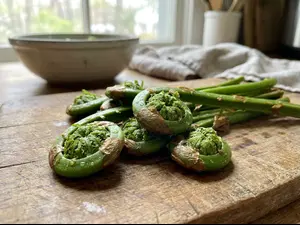
fiddlehead
[fid-l-hed]
one of the young unfurling fronds of certain ferns that are often eaten as greens.

incredulous
[in-krej-uh-luhs]
indicating or showing unbelief

These 10 Money Moves Could Save Seniors Hundreds
Read more →

contemplative
[kon-tem-pluh-tiv]
expressing or involving prolonged thought
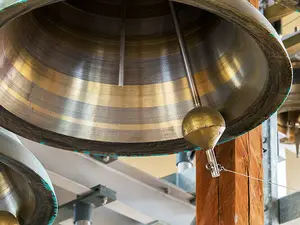
knell
[nel]
the sound made by a bell rung slowly, especially for a death or a funeral

cordial
[kawr-juhl]
courteous and gracious; friendly; warm

chore
[chawr]
a routine task, especially a household one

dowdy
[dou-dee]
not stylish; drab; old-fashioned

gallop
[gal-uhp]
to run rapidly by leaps, as a horse; go at a gallop

limerick
[lim-er-ik]
a kind of humorous verse of five lines, in which the first, second, and fifth lines rhyme with each other, and the third and fourth lines, which are shorter, form a rhymed couplet

bestow
[b-est-ow]
to present or grant something as a gift or honor.

sepulchral
[suh-puhl-kruhl]
relating to a tomb or burial
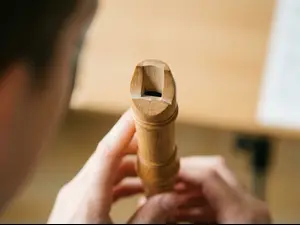
fipple
[fip-uhl]
a plug stopping the upper end of a pipe, as a recorder or a whistle, and having a narrow slit through which the player blows

action
[ak-shuhn]
the process of doing something to achieve a goal
hesitant
[hez-i-tant]
slow to act or speak due to uncertainty